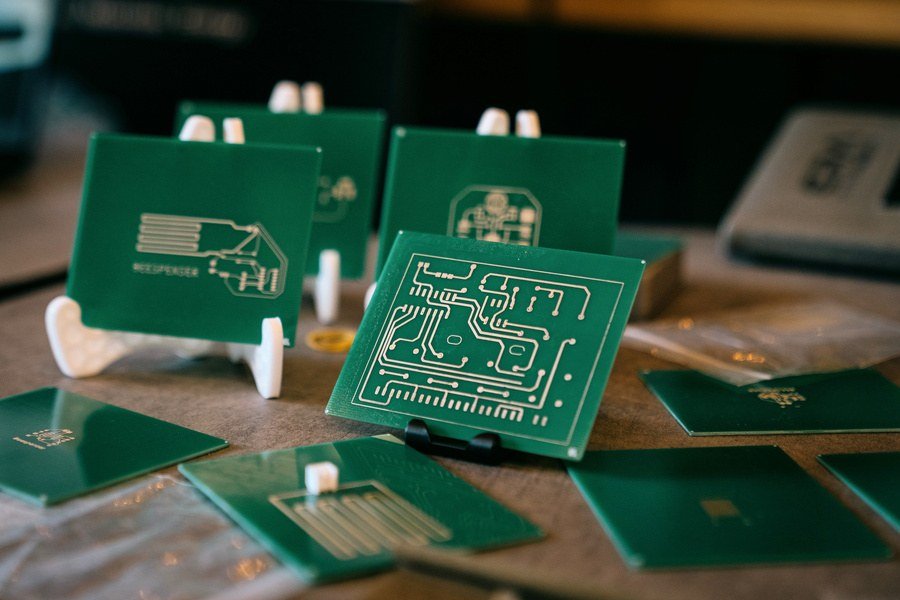
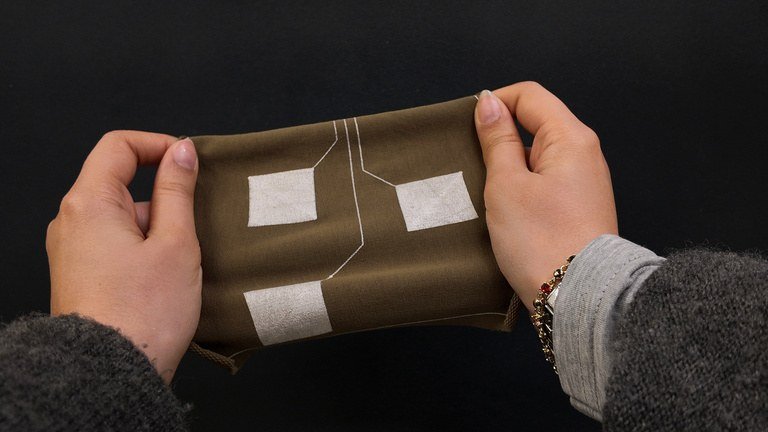
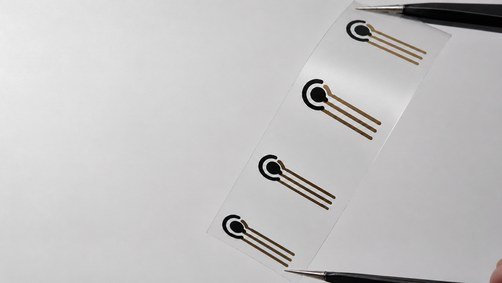
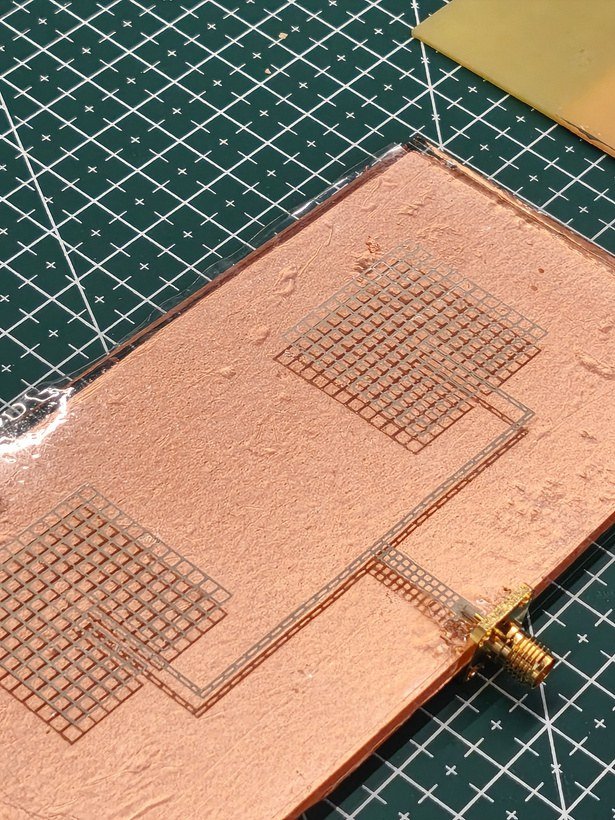
Conductivity comes from the material you print. Silver, graphene and carbon each conduct differently, so the right ink depends on the application you want to build.
BEEINK LINE · HOVER TO TURNFLAKE SILVER · GRAPHENE · NANO SILVER
HOW CONDUCTIVE INKS WORK
How a line of ink starts to conduct.
A conductive ink is a liquid full of tiny conductive particles. While the ink is wet, the particles float apart and no current can pass. Curing brings them together into one continuous path.
WET INKParticles apartRight after printing, particles are spread through the liquid. The line does not conduct yet.CURINGSolvent leavesHeat drives out the solvent. The line shrinks and the particles move closer together.CURED TRACKA connected networkParticles come close enough to connect. Current passes through their contacts and, in nanoparticle inks, by tunnelling across the tiny gaps between them.
WHAT A PRINTED INK CAN DO
Conduct
Tracks, pads, electrodes and antennas.
Heat
Controlled resistance turns current into even warmth.
Sense
Resistance that changes with strain, touch or chemistry.
Insulate
Separates layers so one track can cross another.
Store energy
Printed electrodes for batteries and supercapacitors.
DEVELOPED BY BEESPENSER
BeeInk.
Functional inks, developed for what comes next.
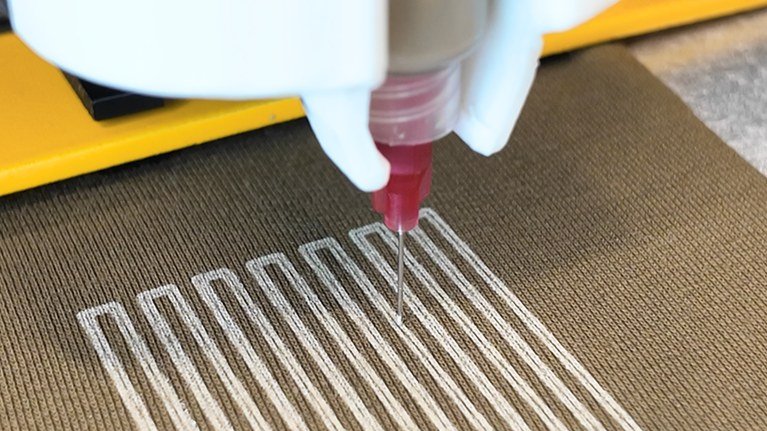
Beespenser's own conductive inks, developed for syringe-based Direct Ink Writing and tuned to Monobee's Dispensing Module for stable, repeatable lines.
From conductive traces to functional layers and electronic assembly, explore material technologies that enable the development of printed and flexible electronics.