ELECTRICAL CONNECTIONS
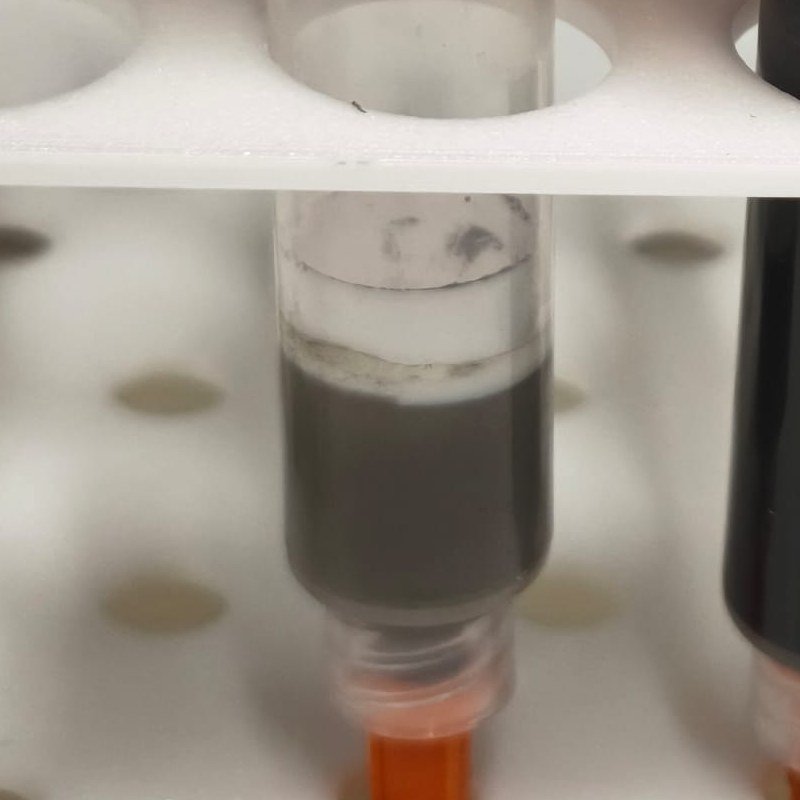
Silver BeeInk
Forms the printed conducting tracks and connection regions that route signals to the instrument. Tracks that stay outside the sample solution can be protected with an insulating layer when appropriate.
Printed electrochemical electrodes are conductive structures that meet a sample so electrical measurements can be used to study chemical reactions. A common configuration uses three: a working electrode (WE), a counter electrode (CE) and a reference electrode (RE).
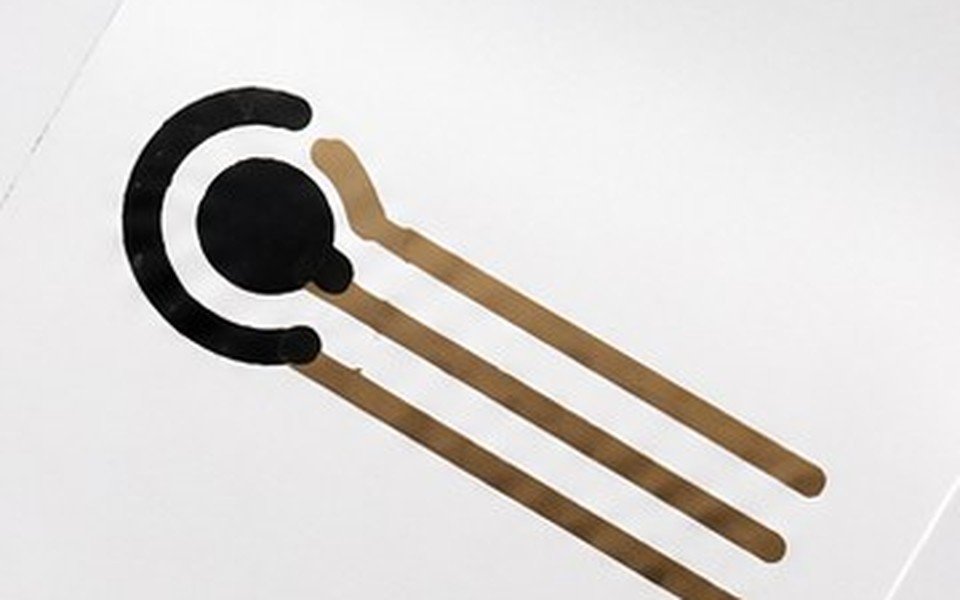
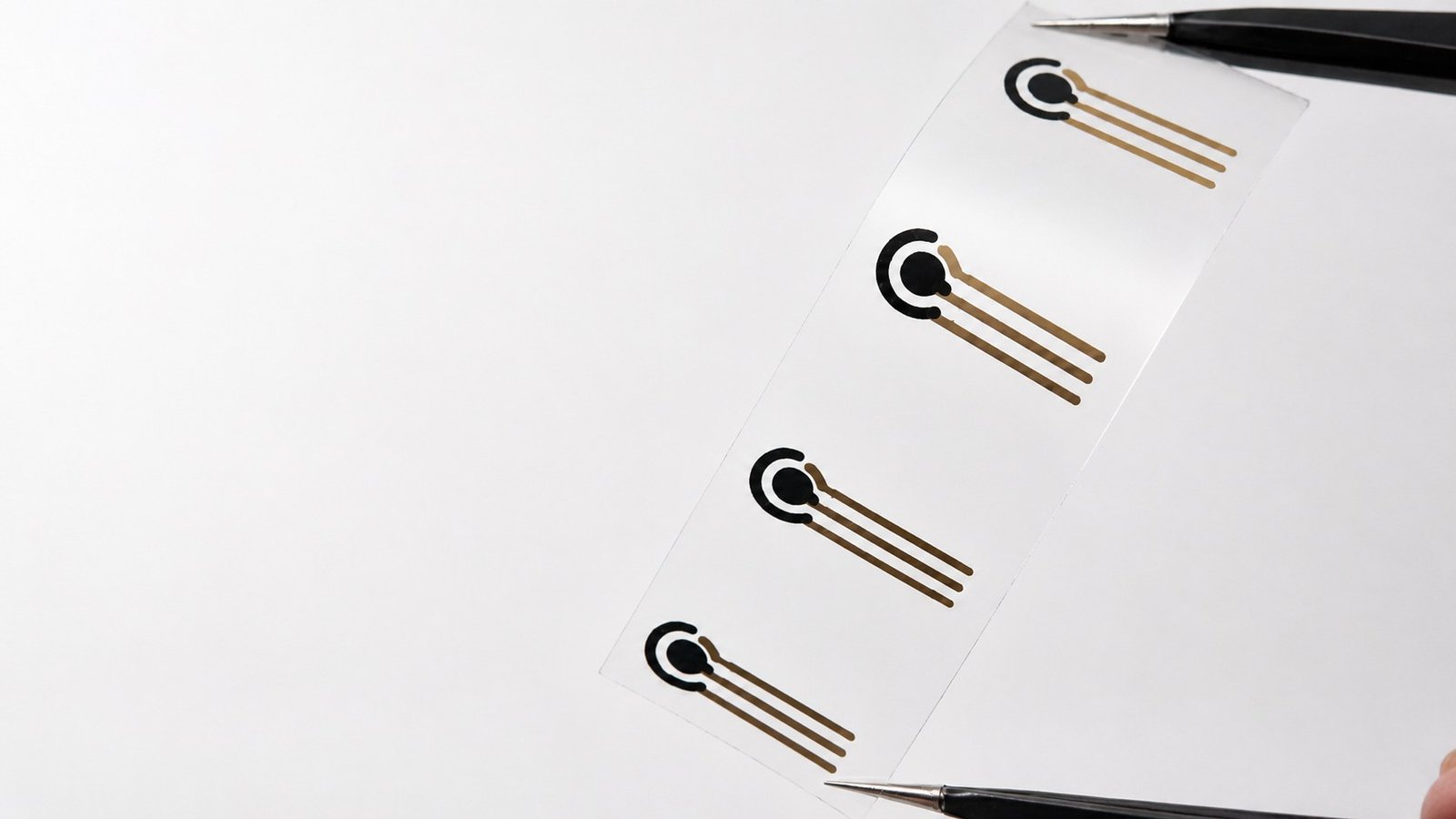
Monobee printed this electrode geometry with multilayer Direct Ink Writing. Silver BeeInk forms the conductive tracks and connections, and Carbon BeeInk forms the electrode regions, in one compact multimaterial pattern.
The objective was to fabricate compact electrode patterns that researchers can connect to electrochemical instruments and adapt for selected assays. Electrode geometry, conductive materials, sample contact and surface chemistry all shape the eventual measurement.
The prototype shows controlled printing of silver and carbon within one electrode design. It is a fabrication example, not a validated analyte sensing study.
A common arrangement places a central working electrode inside a counter electrode, with a separate region for the reference electrode. A potentiostat controls the potential between WE and RE, while current passes mainly between WE and CE.
The reference electrode ideally carries negligible current and supplies a suitably stable potential.
| ELECTRODE | ROLE | COMMON MATERIALS |
|---|---|---|
| Working (WE) | Measurement surface where the electrochemical reaction is investigated | Carbon, gold, platinum |
| Counter (CE) | Provides the return path for current | Carbon, platinum |
| Reference (RE) | Provides a sufficiently stable potential for comparison | Ag/AgCl or another validated reference |
Silver and carbon BeeInk were deposited in successive printing steps, each with material-appropriate DIW settings.
Forms the printed conducting tracks and connection regions that route signals to the instrument. Tracks that stay outside the sample solution can be protected with an insulating layer when appropriate.
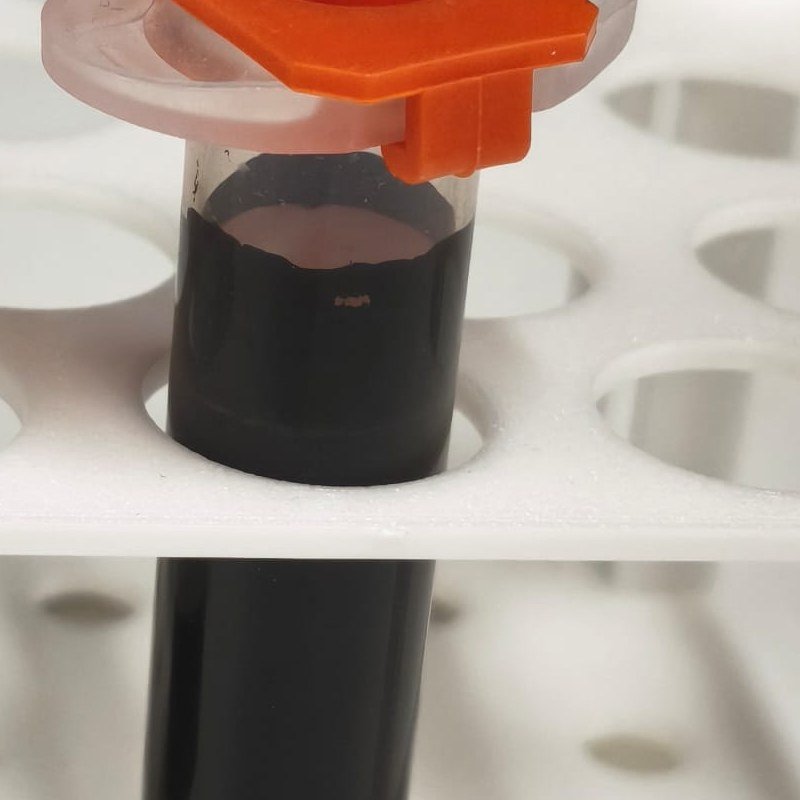
Forms the dark printed areas that may act as electrochemically accessible electrode surfaces. Their role depends on the three-electrode assignment, continuity, exposed area and assay conditions.
Multilayer printing means the materials go down in successive steps. Where silver and carbon patterns overlap, interlayer contact has to be achieved and checked.
Each method answers a different question about the printed interface.
No electrochemical measurement values are reported for this prototype. Sensitivity, detection limit, selectivity and biosensor performance can be stated only after appropriate test protocols and controls.
Printed electrochemical electrodes open several research directions.
These are potential research directions for printed electrochemical electrodes, not demonstrated analytical outcomes of the pictured prototype.
Printing the electrode is the first step.
A conductive pattern establishes the physical interface. Measurement behavior also depends on electrode assignment, reference stability, exposed area, electrolyte, recognition elements where relevant, and the measurement procedure.
Direct Ink Writing lets teams iterate on printed geometries and materials in-house, quickly and cost-efficiently, before developing a validated sensing system.
The Monobee prototype combines Silver BeeInk connections with Carbon BeeInk electrode regions in a multilayer structure. It shows a flexible way to fabricate custom electrochemical electrodes, leaving sensing chemistry, reference design and analytical performance to application-specific development.
RELATED MATERIALS: SILVER AND CARBON BEEINK →It uses a working electrode for the measurement, a counter electrode for the current path and a reference electrode for potential control.